



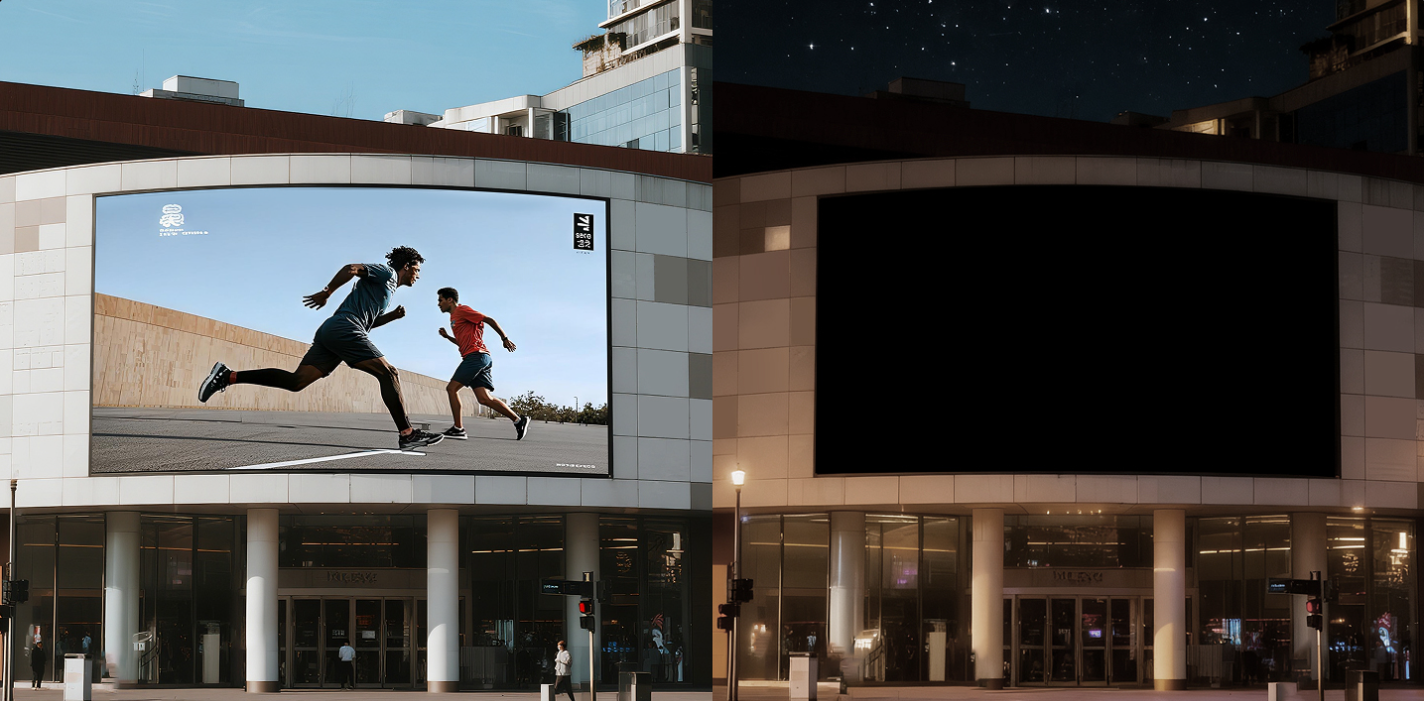
When buyers compare an outdoor advertising LED screen, the conversation usually starts with brightness, cabinet size, or price. Gray scale performance is easier to miss, but it has a direct impact on whether video, photography, gradients, and brand colors look clean in real outdoor conditions.
For advertising displays that run all day, the key question is not only how bright the screen can get. It is whether the screen can keep smooth tonal transitions at high brightness, low brightness, and every level in between.
What Gray Scale Means for Outdoor LED Image Quality
Gray scale describes how many brightness levels each red, green, and blue LED can reproduce between fully off and fully on. A higher bit depth gives the display more steps between dark and bright, which helps avoid harsh jumps in color and luminance.
A 16-bit system can support 65,536 brightness levels per color channel. Across RGB channels, that translates into extremely fine color control, allowing an LED display to show smooth shadows, soft gradients, skin tones, product visuals, and sky scenes without visible banding.
This matters most in large-format advertising because small tonal errors become easier to notice when the image is scaled across a building facade, roadside billboard, shopping mall exterior, or sports venue.
Why Low-Brightness High Gray Scale Matters
Outdoor displays rarely run at one brightness level. They need strong output during daytime, then lower brightness at night to remain comfortable and compliant with local viewing environments. Poor gray scale control often appears when the display dims: gradients break apart, dark areas lose detail, and colors can become unstable.
Low-brightness high gray scale helps preserve image depth after dimming. For operators, this means one screen can deliver strong daylight visibility while still showing refined visuals during evening campaigns, indoor-facing storefront applications, and close-distance public spaces.
Technical Spotlight: QSTECH EG56
QSTECH EG56 is designed for demanding outdoor advertising scenarios where brightness, energy efficiency, and image consistency all matter. It supports high gray scale processing, refresh rates of at least 3840Hz, and brightness options up to 15,000 nits for strong visibility in direct sunlight.
The product also uses common cathode technology to reduce power consumption and heat generation by up to 30%. This helps maintain stable performance during long operating hours and reduces thermal stress on LED components.
| Requirement | Why it matters | EG56 advantage |
|---|---|---|
| High brightness | Keeps advertising visible under sunlight | Up to 15,000 nits |
| High gray scale | Keeps gradients, shadows, and colors smooth | 14/16-bit color processing |
| High refresh rate | Reduces flicker in camera and live viewing | 3840Hz or higher |
| Outdoor durability | Protects operation in rain, dust, and heat | IP66-rated outdoor structure |
| Energy efficiency | Controls operating cost and heat | Common cathode power-saving design |
Color Accuracy and Brand Consistency
Advertising screens often carry brand assets where color accuracy is part of the message. Automotive paint, cosmetics, fashion, food, and consumer electronics all depend on consistent color reproduction. A display with weak gray scale may show brand colors differently across brightness levels, viewing times, or image types.
With better gray scale control, outdoor campaigns can keep color transitions natural and preserve the intended look of creative assets. For media owners, this supports more reliable campaign delivery. For brands, it reduces the risk that a premium visual looks flat, noisy, or overprocessed on a large outdoor screen.
How to Evaluate Gray Scale When Choosing a Display
A datasheet can tell you the bit depth, but the best evaluation combines specifications with visual testing. View gradients, night scenes, skin tones, product photography, and low-brightness playback. Check whether the screen keeps detail in dark areas and whether color bands appear in large flat backgrounds.
If the screen will be used for premium advertising, live video, or architectural media, gray scale should be treated as a decision factor alongside brightness, pixel pitch, refresh rate, cabinet weight, service access, and long-term maintenance.
About QSTECH
QSTECH provides professional LED display solutions for outdoor advertising, commercial display, control rooms, cinema, rental, and all-in-one collaboration spaces. Explore more QSTECH LED display products to compare options for different installation environments.
FAQ
What is gray scale in an LED screen?
Gray scale is the number of brightness levels a display can reproduce for each color channel. Higher gray scale gives the screen finer control over shadows, gradients, and color transitions.
Why does gray scale matter for outdoor advertising?
Outdoor advertising often uses large images, videos, and gradients. Better gray scale reduces banding and helps campaigns look smoother at both daytime and nighttime brightness levels.
Is brightness more important than gray scale?
Brightness is essential for outdoor visibility, but brightness alone cannot guarantee good image quality. A strong outdoor LED screen needs both high brightness and stable gray scale control.
Which QSTECH product is suitable for outdoor advertising?
QSTECH EG56 is suitable for high-brightness outdoor advertising applications that require image stability, energy efficiency, and weather resistance.
Plan Your Outdoor LED Display Project
If your project needs a reliable LED screen for advertising outdoor, QSTECH can help match gray scale performance, brightness, pixel pitch, cabinet structure, and control system requirements to your installation site.
Contact QSTECH to discuss your outdoor advertising LED display project.


