



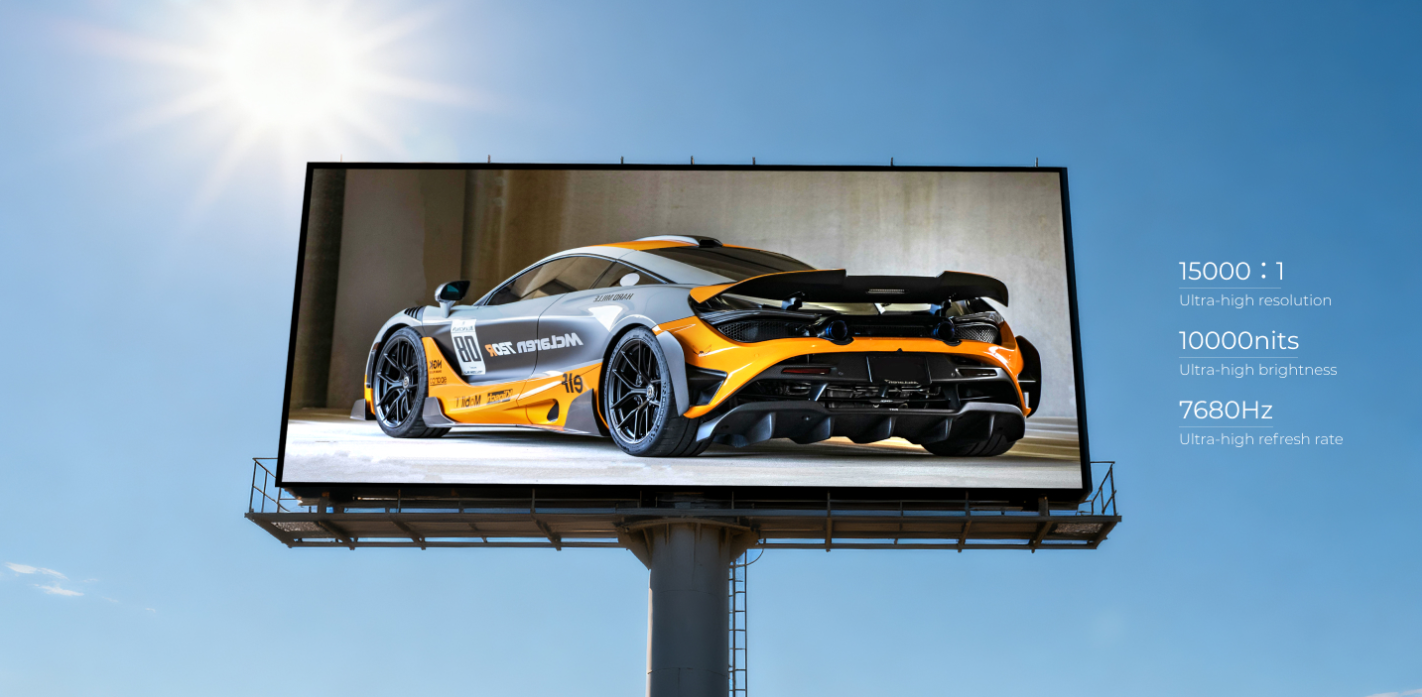
Building envelopes are increasingly used as digital media surfaces. For owners, architects, and system integrators, two common options are LED facade screens and media mesh. They can both turn architecture into a communication platform, but they are built for different priorities.
The right choice depends on image quality expectations, transparency needs, installation structure, viewing distance, and how closely the screen needs to integrate with the building design.
Defining the Technologies
A media mesh is a lightweight LED grid or curtain with wide spacing between pixels. It is usually selected when transparency and low structural load are the main goals. The tradeoff is lower resolution, because pixel pitch is often much larger than a conventional LED display.
An LED facade screen uses more integrated LED display modules or cabinets to create a sharper digital surface. It generally offers narrower pixel pitch, higher contrast, and stronger image control, making it suitable for brand media, commercial advertising, and building landmark applications.
Resolution, Pixel Pitch, and Viewing Distance
Pixel pitch is one of the biggest differences. Media mesh may use pitches around 40mm to 100mm, which works for very large surfaces viewed from long distances. LED facade screens can use much narrower pitches, commonly around 4mm to 10mm depending on project goals.
That difference changes what type of content the display can show. Media mesh is effective for abstract motion, color waves, and long-distance visual effects. A higher-resolution facade screen can show logos, text, product visuals, video, and detailed campaign content with more clarity.
| Decision factor | LED facade screen | Media mesh |
|---|---|---|
| Image detail | Higher resolution and sharper content | Lower resolution for long-distance effects |
| Transparency | Moderate to low depending on structure | High transparency |
| Typical pixel pitch | Often around 4mm-10mm | Often around 40mm-100mm |
| Best content type | Brand video, text, product visuals, ads | Motion graphics and ambient effects |
| Design priority | Media quality and commercial impact | Lightweight architectural integration |
Technical Spotlight: QSTECH Y53
QSTECH Y53 is designed for outdoor facade and building display projects that need a refined visual result rather than only a low-resolution lighting effect. It supports narrow pixel pitch options, strong brightness and contrast, and an IP66-rated structure for outdoor reliability.
The Y53 structure uses an aluminum alloy heat sink and a slim, lightweight cabinet concept to support efficient installation and long-term operation. For projects that need architectural integration plus readable content, this balance can be more practical than a loose media mesh structure.
Weight, Installation, and Architectural Impact
Media mesh is often attractive when the facade must remain transparent or when the building has strict load limitations. Its open structure can reduce wind load and preserve visibility through windows or glass walls.
LED facade screens require more attention to mounting, ventilation, service access, and structural support. In return, they deliver a more controlled media surface. For retail complexes, landmark buildings, transportation hubs, and commercial towers, that improved content quality can justify the more engineered installation.
How to Choose the Right Digital Facade
Choose media mesh when the primary goal is transparency, low weight, and large-scale ambient movement viewed from far away. Choose an LED facade screen when the project needs sharper visuals, readable messaging, video playback, stronger color control, or higher commercial media value.
For many projects, the question is not which technology is universally better. It is which one matches the building's role: subtle architectural lighting, or a high-impact digital display that can carry campaigns and brand communication.
About QSTECH
QSTECH provides LED display products for outdoor facade, advertising, indoor commercial, control room, rental, cinema, and all-in-one display applications. Visit QSTECH LED display products to explore solutions for different building and media environments.
FAQ
What is the main difference between an LED facade screen and media mesh?
An LED facade screen is built for higher image quality and clearer content. Media mesh is built for transparency, lightweight installation, and large-scale visual effects.
Is media mesh better for glass buildings?
Media mesh can be a good fit when transparency and reduced structural load are the top priorities. However, it usually provides lower resolution than a dedicated LED facade screen.
When should I choose an LED facade screen?
Choose an LED facade screen when the building needs readable text, brand video, product visuals, advertising campaigns, or a more premium digital media surface.
Which QSTECH product supports outdoor facade display projects?
QSTECH Y53 is suitable for outdoor facade projects that need narrow pixel pitch, high brightness, durability, and refined image performance.
Build a Facade Display That Fits the Architecture
QSTECH can help evaluate pixel pitch, viewing distance, cabinet structure, brightness, installation load, and content goals for your facade display project.
Contact QSTECH to plan your LED facade screen or architectural media display.


