



In the fast-paced world of trade shows, corporate events, and retail launches, setup efficiency can determine the success of an entire project. For event planners and AV integrators, the exhibition LED display must be more than visually stunning; it must be structurally intelligent.
The transition from heavy traditional video walls to modern modular systems has changed how large-scale visual canvases are deployed. At the center of this shift is the cabinet locking mechanism, the invisible engineering that creates a stable and seamless display surface. Understanding this modular design is essential for professionals evaluating a QSTECH LED display.
The Engineering Behind the Seamless Connection
The primary challenge of any exhibition LED display is achieving seamlessness. Even a sub-millimeter gap between cabinets can create a visible black line that disrupts high-definition content. To solve this, manufacturers use high-precision CNC machining for cabinet frames, often with die-cast aluminum for strength and dimensional stability.
Cabinets are typically joined through positioning pins and fast-lock systems. Positioning pins guide the cabinets along the X, Y, and Z axes, while rotary or vertical tensioning locks pull the cabinets together under controlled pressure. For a high-end QSTECH LED display, these mechanisms are designed for tool-free operation, helping technicians build large walls quickly and accurately.
Modular Advantage: Front-Serviceable Architecture
True modularity extends beyond the external cabinet locks. Exhibition LED displays often operate in high-traffic spaces where accidental damage can happen. A front-serviceable modular design allows individual LED modules to be removed from the front using a magnetic tool without dismantling the entire wall.
This modular approach also applies to internal electronics. By merging the power supply, receiving card, and hub board into integrated modular units, manufacturers can reduce internal wiring, lower connector failure risk, and create a thinner, lighter cabinet structure.
Technical Spotlight: QSTECH X-Wall Pure
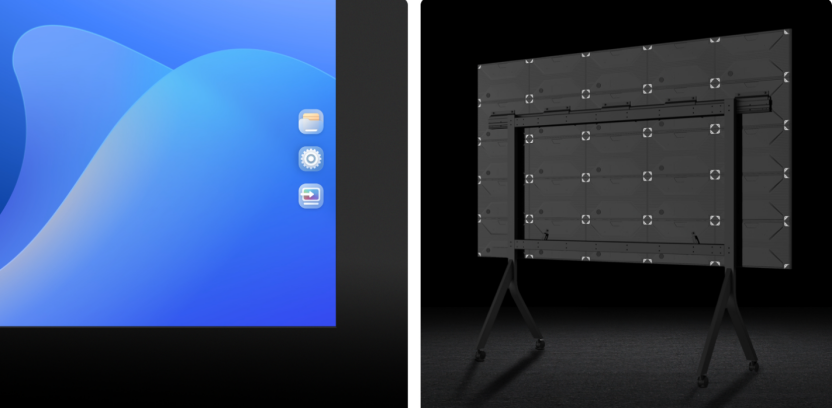
When analyzing modular excellence in permanent or semi-permanent corporate settings, the QSTECH X-Wall Pure stands as a benchmark for integrated design. It combines modular maintenance with flagship-grade visual performance.
Key Modular Engineering Benefits
| Design Area | X-Wall Pure Capability | Exhibition Value |
|---|---|---|
| Integrated electronics | 3-in-1 board combines power, control, and data distribution | Fewer failure points and simpler maintenance |
| Display surface | Full flip-chip COB packaging | Smooth, durable surface for high-traffic environments |
| Cabinet profile | 31mm ultra-slim structure | Poster-like appearance and easier integration into booth design |
| Visual performance | 6500:1 contrast and 170-degree viewing angle | Consistent brand content visibility across the floor |
| Interaction | High-precision touch support | Turns a display wall into an interactive brand hub |
These specifications show how modular design affects more than installation speed. It also improves reliability, maintenance access, and user experience.
Structural Stability and Safety in High-Traffic Areas
For any exhibition LED display, safety is a major concern. Locking mechanisms must withstand the weight of large screens without loosening or warping, especially in crowded public venues.
Modern QSTECH LED display units undergo stress testing to ensure the locks can handle demanding installation conditions. Distributed modular electronics also help with thermal management, reducing localized heat and helping prevent thermal expansion that could affect cabinet alignment.
Why Modular Selection Matters for ROI
A display with a superior modular locking system can reduce installation labor, shorten setup time, and minimize repair downtime. For businesses, this translates directly into lower total cost of ownership. When investing in a QSTECH LED display, buyers are choosing a system designed for professional environments where speed, reliability, and image quality all matter.
About QSTECH
With more than three decades of LED display innovation, QSTECH has consistently advanced All-in-One LED technology. Supported by CVTE's R&D infrastructure, including more than 9,000 patents and specialized research labs, QSTECH delivers displays that are good looking, good sounding, and good to use for customers in more than 140 countries.
FAQ
Why do exhibition LED display cabinets need fast-lock systems?
Fast-lock systems help technicians align and secure cabinets quickly while maintaining a seamless visual surface across the full display wall.
What is front-serviceable LED display design?
Front-serviceable design allows modules or key components to be accessed from the front of the display, reducing repair time and avoiding full wall disassembly.
How does modular design improve ROI?
It reduces labor hours, speeds up setup, simplifies maintenance, and lowers downtime, all of which improve the total cost of ownership for event and exhibition deployments.
Ready to Build a Better Exhibition Display?
QSTECH can help you design an exhibition LED display system that combines fast installation, modular maintenance, and premium visual performance.
Contact QSTECH for a professional consultation.


