



Have you ever spent a significant portion of your marketing budget on a stunning digital billboard, only to realize nobody can read it at noon? When direct sunlight hits a standard digital screen, the vibrant colors and sharp text instantly fade into a murky, unreadable gray. This frustrating issue completely ruins your visual impact and wastes your advertising potential.
This guide explains the exact technical reasons why outdoor screens lose their battle against the sun. You will learn how ambient light destroys contrast and discover actionable, practical solutions to restore your display's brilliant visibility.
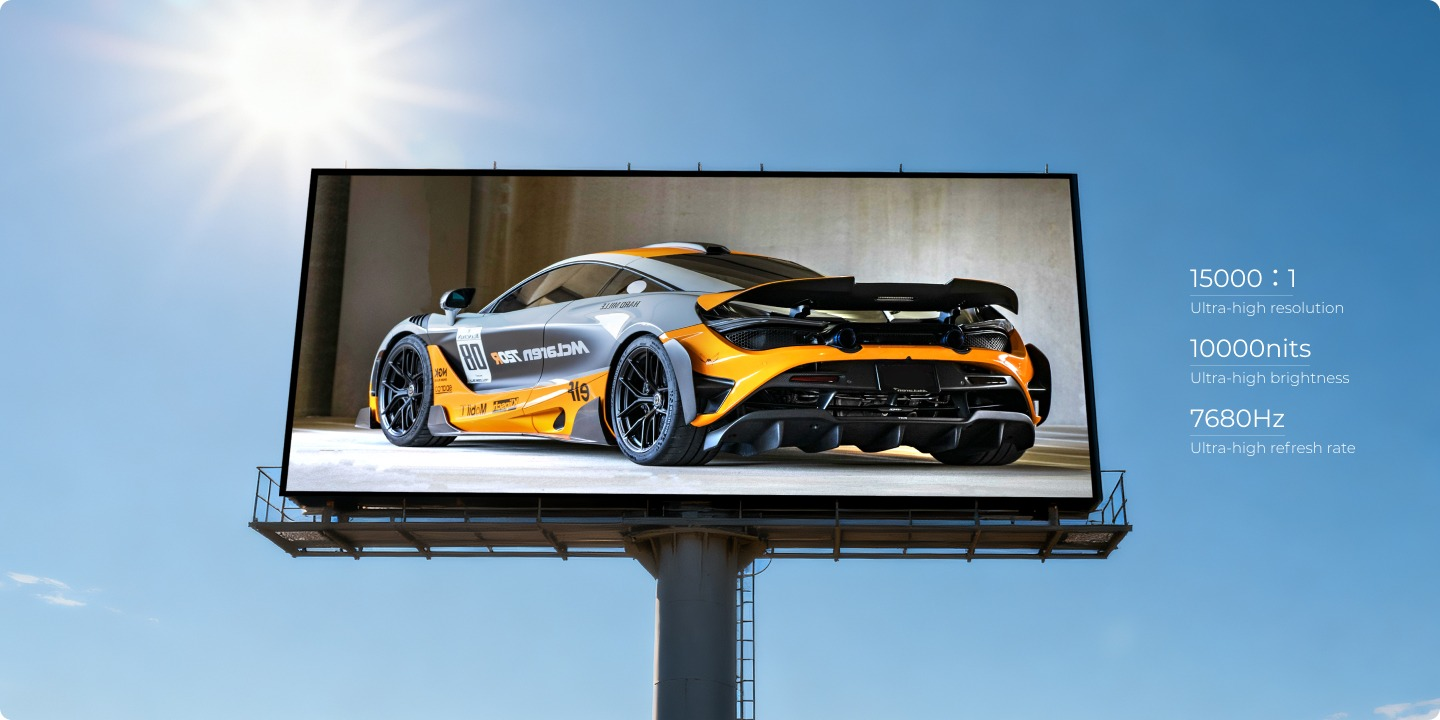
The Science of Screen Glare: Why Sunlight Wins
Sunlight is incredibly powerful. To understand why your screen looks washed out, you need to examine two specific technical factors: light output and contrast ratio. When these two elements fall short, the sun easily overpowers your hardware.
The Battle of Brightness and Nits
The digital display industry measures light output in a unit called "nits." A standard indoor television produces about 400 nits. This works perfectly in a dark living room. However, the sun produces overwhelming amounts of ambient light. If your outdoor screen only pushes 2,000 or 3,000 nits, the sun simply overpowers the light emitting from the internal diodes. To compete with direct midday sun, a commercial screen must output a minimum of 5,000 nits, with premium models pushing 7,000 nits or more.
The Contrast Ratio Problem
Brightness alone does not solve the glare problem. Contrast ratio matters just as much. Contrast measures the difference between the brightest white and the darkest black on your screen. When sunlight hits the physical surface of the display, it reflects off the metal and plastic hardware. This reflection turns the deep black backgrounds into a glowing, muddy gray. This physical reflection destroys the contrast, making the entire image look completely washed out, regardless of how bright the bulbs shine.
Practical Solutions to Fix a Washed-Out Screen
If you currently struggle with an unreadable display, you can take several immediate steps to improve the situation without completely replacing the hardware.
· Adjust Your Maximum Brightness Settings: Check your central control software. Many operators accidentally leave their screens on an automatic energy-saving setting that caps the maximum brightness too low. Ensure your system allows the display to push 100% power during peak daylight hours.
· Optimize Your Content for High Contrast: Avoid using dark, subtle colors in your daytime advertising. Dark blue or gray text on a black background will completely disappear under the sun. Instead, use high-contrast color combinations. Bold white text on a bright red or vibrant green background cuts through the glare much more effectively.
· Install Physical Sunshades: If your installation location allows it, add a physical awning or structural overhang above the screen. Blocking direct overhead sunlight drastically reduces the ambient light hitting the display surface, instantly improving the contrast ratio.
· Clean the Screen Surface: Over time, outdoor screens accumulate a thick layer of dust, exhaust soot, and pollen. This layer of dirt catches the sunlight and diffuses it across the screen, worsening the washed-out effect. Schedule regular professional cleanings to keep the diode surfaces pristine.
Upgrading Your Display Technology
Sometimes, software tweaks and content changes cannot save an underpowered screen. If your hardware lacks the necessary punch, you must upgrade your technology. Modern engineering offers incredible solutions for combating intense sun glare.
Using a high-quality narrow pixel pitch led display ensures that the light clusters sit tightly together. This density not only provides a sharper, high-definition image but often includes advanced, dark-masking technology. Manufacturers place tiny, light-absorbing plastic shades—often called louvers—above each individual diode. These physical masks soak up the ambient sunlight rather than reflecting it back at the viewer. This engineering preserves those deep, rich black levels even at high noon, guaranteeing a vibrant picture.
Meet the Y53 Series: Engineered to Beat the Sun
When you need a display that aggressively fights back against extreme weather and intense sunlight, you require specialized hardware built for the job. The Y53 series serves as the ultimate solution for demanding outdoor environments. This premium building led screen features an ultra-bright output that effortlessly slices through direct midday glare. Its innovative design incorporates high-contrast masks that physically block incoming sunlight, ensuring your text and images remain razor-sharp. Furthermore, the Y53 utilizes a highly transparent, breathable chassis that keeps the internal components cool. This allows the screen to run at maximum brightness all day without overheating or degrading the diodes, providing a flawless visual experience.
Reclaim Your Visual Impact
Do not let the sun dictate the success of your digital advertising. By understanding the relationship between ambient light, brightness, and contrast, you can make smart adjustments to keep your message clear. Whether you tweak your content colors, adjust your software settings, or upgrade to specialized outdoor hardware, you can easily reclaim your audience's attention.
Explore QSTECH's LED solutions today to find the perfect high-brightness display for your outdoor advertising needs.


